BendWeekly.com
Saisons on the Lawn
Join us for our second annual Saisons on the Lawn event at Crux! Entry is free. Taster package is $20 and includes a special tasting glass and 5 tokens. Additional tokens can be purchased for $2. Each token gets you one 4oz sample of saisons available from 6+ breweries. All proceeds benefit the Oregon Brewers Guild.
The post Saisons on the Lawn appeared first on Visit Bend.
2024 Earth Day Fair and Parade
An Annual Celebration of Earth And Community.
Save the Date! The 2024 Earth Day Fair and Parade will take place on Saturday, April 20th.
This family-friendly event typically features a lively and inclusive parade through downtown Bend where folks are encouraged to wear costumes to showcase their favorite thing about planet earth. During the fair, food vendors, booths, and performers offer something for everyone.
Stay tuned for updates on performances that will take place on Troy Field!
The post
Saturday Storytime: To Find Treasure in the Mountains by Francine Rockey
Join us for a special Saturday storytime with Bend author Francine Rockey for her book, To Find Treasure in the Mountains! This event is free.
With sturdy shoes and a sense of adventure, three young children hike through the sparkling woods to find treasure in the mountains.
No pirate’s map or magic wand required! Outside, there is always something wonderful just around the bend.
Is that treasure hidden in a hollow old tree trunk? Does treasure gleam near the lizard with the bright blue belly? C
2024 Earth Day Fair
An Annual Celebration of Earth And Community. This family-friendly event typically features a lively and inclusive parade through downtown Bend where folks are encouraged to wear costumes to showcase their favorite thing about planet earth. During the fair, food vendors, booths, and performers offer something for everyone. Be sure to stop by the Pollinator Pathway Bend table!
The post 2024 Earth Day Fair appeared first on Visit Bend.
ReadersMagnet Brings More Happiness and Stories at the 2024 Los Angeles Times Festival of Books
This spring, self-publishing and book marketing company ReadersMagnet returns to the Golden State for the 29th Los Angeles Times Festival of Books. The book event will occur at the University of Southern California, LA, on April 20-21, 2024.
The Los Angeles Times Festival of Books is the largest book fair in the country. It celebrates literature, people, and talent. The free indoor and outdoor community event includes over 300 exhibitors and more than 500 authors. Everyone is welcome to experien
Bend Underground Comedy Club
Come to Historic Downtown Bend and be transported into a true Comedy Club environment! Every THIRD FRIDAY of the month, we transform The Wine Shop and Beer Tasting Bar in Downtown Bend into a secret comedy hideaway! We feature ONLY the finest local, regional and sometimes NATIONAL comedy talent alongside top quality beer and wine options. Hosted by local radio DJ and tenured comedian Eric Oren (as seen on NBC, TruTV, Billboard Charts) from 107.7 The Beat FM, come be a part of our SEATING LIMITED
We Will Rock You: School Edition
See a play! Come support the performing arts community of Bend and Central Oregon!
WE WILL ROCK YOU tells the story of a globalized future without musical instruments. A handful of rock rebels, the Bohemians, fight against the all-powerful Globalsoft company and its boss, the Killer Queen; they fight for freedom, individuality and the rebirth of the age of rock. Scaramouche and Galileo, two young outsiders, cannot come to terms with the bleak conformist reality. They join the Bohemians and embar
Live at the Vineyard: Jonathan Foster
North American singer-songwriter Jonathan Foster is a recording artist and touring musician originally from Cranberry Lake, located in the foothills of the Adirondack Mountains of New York State, who currently resides atop the Central Valley in Redding, California. He recently released his sixth studio album, Roadside Attraction (2023) and has prolifically toured the country and released songs over the past decade. Foster delivers authentic roots music that blends folk, Americana, and acoustic s
Kids’ Business Spring Market
Kids in our community who make and sell their own products & services. (with minimal help from parents)
See fresh business ideas from young minds in our community. Come support these young entrepreneurs and empower them to dream big!
There will be crafts, food, gifts, toys, games, and more!
Bring: Friends
FREE to shop, $5 to participate.
Registration form to participate: www.izzaroo.com/KidsBizEvent
The post Kids’ Business Spring Market appeared first on Visit Bend.
Kids Ninja Warrior Spring Break Camp
Drop off your kids for an unforgettable experience at Free Spirit’s Kids Ninja Warrior Spring Break Camp! Our seasoned ninja coaches will lead them through exhilarating team games and tricky Ninja Warrior challenges to enhance their jumping, balancing, climbing, agility, and speed skills. Our inclusive camp fosters positive vibes, providing an ideal setting to make connections with like-minded peers who share a burning passion for Ninja Warrior. Act quickly as spots fill up fast! Enroll your kid
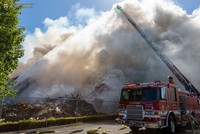
Second Alarm Fire at Jopp Wood Recycling (Photo)
Just after 8:15 AM, 9-1-1 received multiple calls reporting a fire and tapped out a single-alarm fire response in an industrial area of the St John’s Neighborhood in North Portland. Initial reports from callers stated that a large pile of wood products was on fire and that no homes or structures were threatened.The first arriving Engine and Truck Companies from St John’s arrived within six minutes of being dispatched. The Engine officer took command of the incident and reported a large pile of p
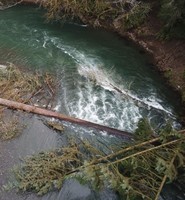
Scout Ahead and Keep a Sharp Lookout for Obstructions (Photo)
Heavy wind and rain from winter storms cause trees to plunge into Oregon rivers. Trees become obstructions, a risk for all boaters, including paddlers, rafters, and drift boats. Some of these obstructions will become more dangerous as river levels drop, requiring boats to portage around the obstructions for safe navigation.“We urge every boater to plan ahead. River conditions can change daily which is why checking river levels is critical. Always look downstream as you navigate allowing time to

Visit Central Oregon awards $450,000 to 15 tourism-related projects through Central Oregon Future Fund
Visit Central Oregon has announced Thursday that 15 recipients will be awarded a total of $450,000 in grant money as part of ...

Oregon mother crafts creative solutions to keep her teen sober, happy
When the youth behavioral health system failed the Happy Valley teen, her mother, Sue Curran, stitched together a quilt of ...

Oregon minimum wage will go up 50 cents July 1
Oregon’s minimum wage will go up by 50 cents per hour in all three regions starting on July 1. The automatic increases were ...

Celebrate Earth Day and public lands protections with these Central Oregon hikes
Living in Central Oregon for most of my life, there have been times when I have taken protected public lands for granted.

Oregon’s largest community read program, ‘A Novel Idea,’ marks 21 years
After a milestone 20th anniversary in 2023, Deschutes Public Library is ready to launch the annual celebration of building community, one book at a time. This year, the Novel Idea community read ...
Kids Ninja Warrior Spring Break Camp
Drop off your kids for an unforgettable experience at Free Spirit’s Kids Ninja Warrior Spring Break Camp! Our seasoned ninja coaches will lead them through exhilarating team games and tricky Ninja Warrior challenges to enhance their jumping, balancing, climbing, agility, and speed skills. Our inclusive camp fosters positive vibes, providing an ideal setting to make connections with like-minded peers who share a burning passion for Ninja Warrior. Act quickly as spots fill up fast! Enroll your kid

Multi-Agency Stolen Vehicle Operation Yields Positive Results (Photo)
A multi-agency stolen vehicle operation resulted in the recovery of multiple stolen vehicles and guns.
On Saturday, April 13, 2024, officers assigned to the Portland Police Bureau’s East Precinct ran a multi-agency stolen vehicle operation with assistance from PPB’s K9 and Air Support Units, the Gresham Police Department, Port of Portland Police Department, Multnomah County Sheriff's Office, Multnomah County District Attorney’s Auto Theft Task Force, and Parole & Probation. The Vancouver Po

U.S. Attorney's Office Launches Carjacking Task Force
PORTLAND, Ore.—The U.S. Attorney’s Office for the District of Oregon announced today that it will join 10 other U.S. Attorney’s Offices in establishing a multi-agency task force to address carjacking, an important public safety threat impacting communities in Oregon and beyond.“We are pleased to join our Justice Department colleagues from across the country in taking this important, targeted step to address carjacking, a dangerous, violent crime. We thank all our law enforcement partners for the